
Color Theory in the Torch: How Heady Artists Use Chemistry to Create Impossible Shades

A high-end glass piece can contain colors that seem almost artificial: purple that becomes blue beneath a different bulb, transparent amber that blooms into metallic rainbow, or a pale rod that develops deep reds only after repeated heating. Those effects are not surface paint. In borosilicate glass, color is built into the material and then manipulated through chemistry, flame atmosphere, heat history, thickness, and light.
That is one reason color work has become such an important part of modern functional glass. As 710 Pipes has covered in its history of modern glass-pipe artistry, technique and material choice can be as recognizable as the artists individual style.
Table of Contents
CFL Colors: One Piece, Two Different Palettes

CFL color is shorthand for borosilicate formulated to show a pronounced color shift under different light sources. The glass is not generally undergoing a new chemical reaction each time the lighting changes. Instead, its ingredients absorb selected wavelengths of visible light. Because daylight, incandescent bulbs and fluorescent lamps do not emit identical spectra, the light that makes it back to your eye changes.
Research on illumination-controlled color behavior in doped glass demonstrates how narrow absorption bands in certain glass colorants can overlap differently with fluorescent versus incandescent light, producing a dramatic change in perceived hue.
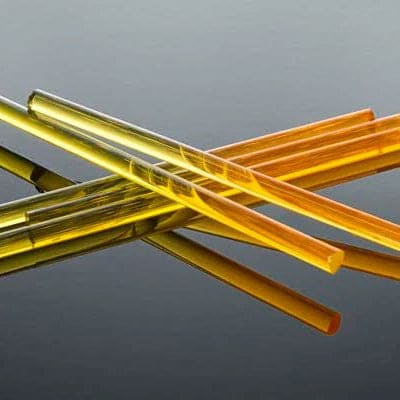
Modern lampworking manufacturers deliberately exploit that effect. Glass Alchemys “Serum” color, for example, shifts from champagne yellow in natural light toward soft pink under CFL lighting. Its cadmium-based “Terps” rods moves from orange toward yellow.
For a heady artist, CFL glass adds another design variable: the finished piece does not have one fixed palette. Its appearance depends on where and how it’s displayed.
Fuming: Making Color From a Film of Metal
Fuming creates color in a completely different way. Rather than beginning with a fully colored rod, the artist heats a small amount of metal (typically silver or gold) until it vaporizes and condenses onto cooler glass. You can think of the process as depositing metal fumes onto the surface of the piece.
The amount of metal deposited is extremely small, but the visual effect can be substantial. The final color depends on things such as the metal used, how heavily it is applied, the flame atmosphere, the underlying glass, subsequent heatwork, and whether the fume is then encased beneath clear glass.
That is why fuming can produce gradients and iridescent effects that are difficult to reproduce exactly. The technique is well established enough and listed in our own Glass Blowing 101 glossary, but at the heady level it becomes less like adding a color and more like controlling a reactive optical layer.

Striking, Reduction and Reactive Borosilicate
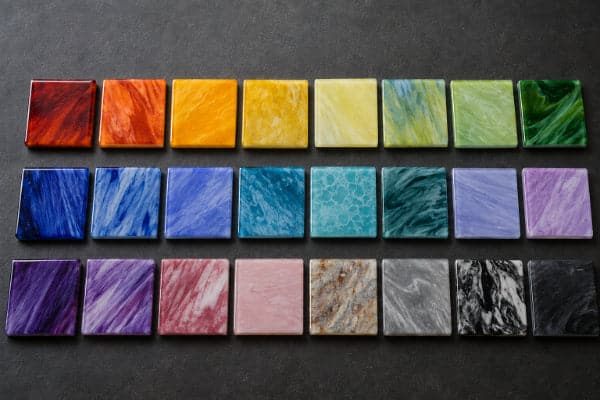
Some of the most complex boro colors change because the artist changes the glass itself during heatwork.
A striking color develops or intensifies after specific heating and cooling cycles. Borosilicate striking colors can produce multiple hues from a single rod depending on flame settings, reduction and annealing conditions. Reactive colors containing metals such as silver and copper can shift even further as the oxygen-to-fuel balance of the torch changes.
One popular combo is a green base with silver and copper which can develop creams, blues, yellows, oranges, purples and metallic effects under different reduction conditions. Another might use silver and germanium chemistry to produce a broad warm spectrum that varies with thickness, layering and kiln time.
This is where experienced torch control matters. Reduction is a process where changing the flame atmosphere can alter the valence state of metallic colorants at the glass surface. In practical terms, a few adjustments in oxygen, propane, heat and timing can separate a clean jewel tone from muddy gray or an unintended metallic surface.
Tip for New Collectors
When you see radical color variation from the same section of a piece “like ruby, amber and metallic sheens in one patch of glass” you are usually looking at intentional striking and reduction, not painted color.
Browse Our Glass Blowing Glossary
Why Some Borosilicate Colors Cost More
Expensive color is not simply a matter of branding. Several real production costs can stack together.
First, some formulas contain costly materials. As silver prices have surged, for example, many manufacturers had to reformulate their reactive colors to try and offset the cost. Second, difficult colors require more research and tighter manufacturing control with some colors requiring hundreds of tests to get a stable product.
| Cost Factor | How It Affects Color Rod Price |
|---|---|
| Precious metal content | Colors using silver, gold or other expensive metals rise with commodity prices. |
| R&D and testing | Striking and reactive palettes often require hundreds of trials to keep them stable for artists. |
| Heat sensitivity | Cadmium and some opaque colors demand gentle preheating and tight flame control, increasing scrap rates. |
| Batch-to-batch yield | Some formulas produce more unusable or off-spec glass, spreading cost across fewer saleable rods. |
| Limited runs | Experimental or small-batch colors are made in short quantities, so fixed costs are higher per pound. |
Third, certain colors are physically less forgiving. Northstar identifies several opaque and cadmium colors as heat-sensitive because their colorant chemistry can boil or scar under aggressive heating. A color that requires slower preheating, careful encasement or narrowly controlled flame chemistry costs the artist time and increases the risk of losing work.
Finally, some palettes are genuinely scarce. Experimental formulas may be produced only in development or limited batches and even then they may vary in exact appearance from batch to batch.
None of that means an expensive color rod automatically makes an expensive pipe. Artist reputation, complexity, labor, originality and execution remain major factors in heady glass pricing. But rare or technically demanding color can raise both the material cost and the difficulty of the work.
Color Is Part Chemistry, Part Technique
The most unusual shades in heady borosilicate are rarely created by a single ingredient. They emerge from a system: glass formulation, metal content, flame chemistry, heating cycles, layer thickness, encasement, and the spectrum of the light hitting the finished piece.
That is what makes advanced color work collectible. Two artists can start with the same rod and produce dramatically different results, and a single finished piece can still reveal colors that were not obvious when it left the torch. For collectors browsing 710 Pipes, understanding that chemistry makes it easier to recognize when color itself is part of the craftsmanship.