
Klein Recyclers vs. Incyclers vs. Standard Recyclers: What’s the Difference?
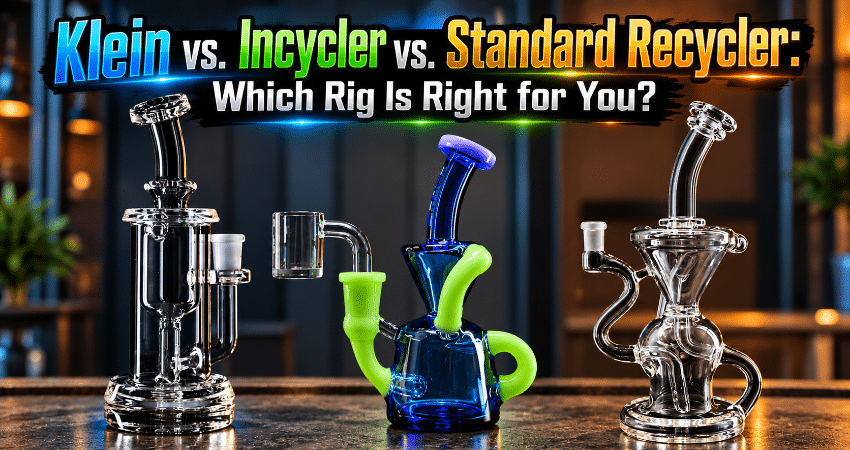
Recycler rigs are easy to recognize once water starts moving through them, but the terminology can get confusing quickly. A standard recycler may have exposed tubes connecting separate chambers. An incycler moves much of that same circulation inside the body of the rig. Then there are Klein recyclers, which borrow their geometry and name from the Klein bottle and often blur the line between the other two categories.
The useful way to compare them is not by the label alone. Look at where the water travels, how it returns to the lower chamber and how much of the recycling path sits inside or outside the main body.
What Makes a Rig a Recycler?
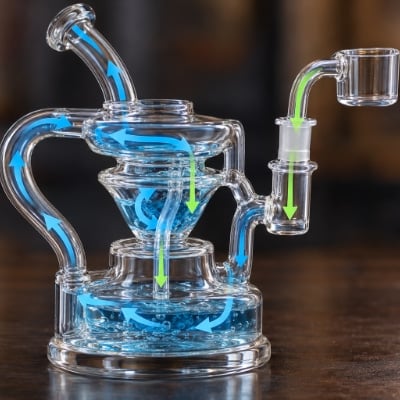
A recycler creates a repeating water path during the draw. Water is pulled from a lower reservoir through an uptake path into another section of the rig, then returned through a drain so the process can continue while air is moving through the piece.
That percolation distinguishes a recycler from a simpler single-chamber rig, where water is displaced during the draw but is not separately drained through a dedicated return loop. If you are newer to concentrate glass, 710 Pipes’ history of dab rigs provides useful background on how modern rigs developed and why their chambers are generally smaller than traditional water pipes.
Standard Recycler: The Loop Is Easy to See
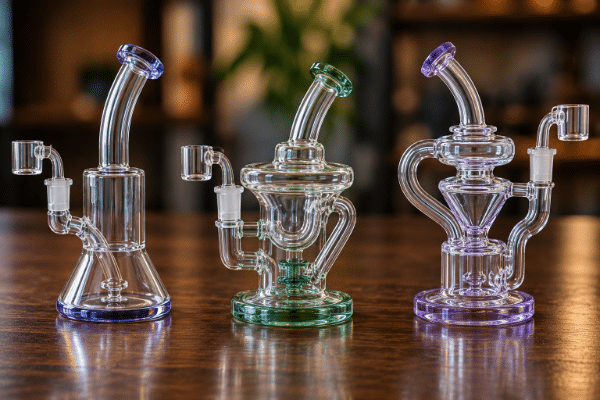
What people often call a standard or external recycler usually makes its plumbing obvious. One or more uptake tubes carry water upward from the lower chamber, while a separate drain path returns it to the base.
The design can make the cycling action especially visible. It also gives the glassblower considerable freedom to change chamber size, tube placement and drain geometry.
The tradeoff is physical complexity. External arms add protruding glass, and the additional bends and narrow passages can trap resin. A recycler rewards regular maintenance as heavy buildup can occur quickly. 710 Pipes’ guide to cleaning a dab rig covers the basic cleaning process.
Incycler: Put the Recycling System Inside
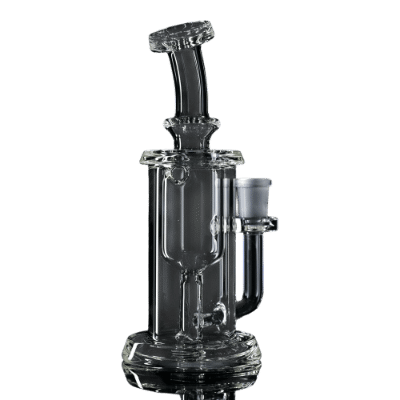
“Incycler” is short for internal recycler. Instead of relying primarily on exposed external plumbing, an incycler places the secondary chamber or recycling pathway within the main body of the piece.
That internal arrangement tends to create a compact silhouette and protects more of the functional glasswork inside the rig.
The downside is access. Internal tubes, funnels and drains may be harder to reach during cleaning, particularly once concentrate residue accumulates. Their function can also be less obvious when the piece is sitting still; the design makes much more sense when water is actively circulating.
Klein Recycler: A Geometry, Not Just Another Chamber Layout
A Klein recycler takes its name from the Klein bottle, a mathematical surface famous for looping through itself. Glass Klein bottles are physically realizable approximations of that mathematical form, with a neck that passes through the side of the vessel and reconnects to the body.
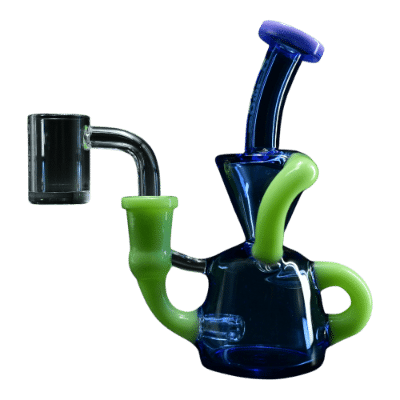
Functional glass artists adapted that visual logic into recycler rigs. Depending on the maker, a Klein may use an internal drain, an external uptake, intersecting-looking pathways or a combination of internal and external circulation. That is why “Klein recycler” and “Klein incycler” are sometimes both used for the same general family of designs.
In general, conventional recyclers use more visible external uptake and drain paths, incyclers concentrate more of the circulation inside the main chamber, and Klein recyclers often combine internal and external paths into a more complex looping geometry.
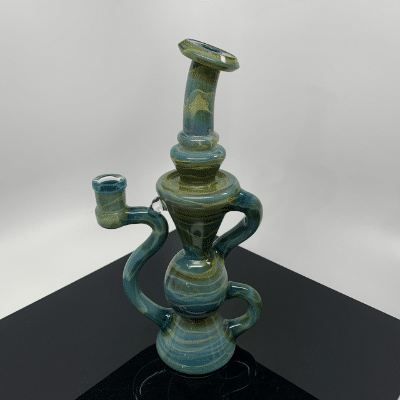
710 Pipes’ own inventory shows the overlap in real products. The Happy Time Double Klein Recycler, for example, is categorized as a Klein recycler rather than simply as a generic two-chamber rig.
How the Three Designs Compare
These will help you ID different recyclers, but they’re not strict engineering standards. Handblown functional glass evolves constantly, and artists routinely combine features from multiple designs.
| Design | Typical Recycling Layout | Main Visual Trait | Practical Consideration |
|---|---|---|---|
| Standard recycler | External uptake and return paths | Exposed looping tubes | Easy to watch function; more external glass |
| Incycler | Recycling chamber/path housed primarily inside | Compact outer profile | Protected internals; tighter passages can complicate cleaning |
| Klein recycler | Internal/external paths arranged around Klein-style geometry | Intersecting or self-looping appearance | Terminology and exact layout vary by artist |
Function Depends on More Than the Category
Two recyclers with the same label can function very differently. Chamber volume, percolator restriction, uptake diameter, drain size, tube angle and water level all affect how readily the piece begins recycling and how quickly water returns to the base.
A well-balanced recycler should establish circulation without requiring an unnecessarily hard draw or sending water toward the mouthpiece. That is why judging a piece only by the number of tubes, or by whether the listing says “Klein”, misses much of what determines its actual function.
Which Recycler Design Makes Sense?
A standard recycler is a good fit if you enjoy visible external function and the sculptural plumbing that defines the style. An incycler offers similar recycling principles in a more contained package. A Klein appeals when the circulation system itself is part of the artistry, with pathways arranged in a more technically ambitious form.
Whichever style you are considering, look at the complete geometry, joint size, stability, ease of cleaning and demonstrated water function. With recyclers, the name tells you what category it’s in but the actual execution is what determines if the design actually works well.